Chris Espinosa:
MacOS 10.13.3 Source. You can also view this project list in the following formats: plist, text; Projects which are new or updated in this release have a bullet and are in bold. To determine the specific license terms that apply to a project, look at the project source code license headers and the actual license included with the project. Apple File System (APFS) is a proprietary file system for macOS High Sierra (10.13) and later, iOS 10.3 and later, tvOS 10.2 and later, watchOS 3.2 and later, and all versions of iPadOS, developed and deployed by Apple Inc. It aims to fix core problems of HFS+ (also called Mac OS Extended), APFS's predecessor on these operating systems. Jul 12, 2017 Why You Probably Don’t Want to Use APFS Yet. RELATED: The Best New Features in macOS Sierra (and How to Use Them) The new Apple File System is currently experimental. Apple is targeting a final release in 2017, and your Mac’s system drive–and the drives inside iPhones, iPads, Apple TVs, and Apple Watches–should automatically convert to APFS at that point. “Revert the default disk format to qcow2 for users running macOS 10.13 (High Sierra). There are confirmed reports of file corruption using the raw format which uses sparse files on APFS.” Update (2018-07-17): As of macOS 10.13.6, I’m still seeing PDF problems: crashes and hangs in Preview, blank thumbnails, and pages that don’t render.
High Sierra is Apple’s 28th major operating system release for the Mac product line, spanning five processor architectures over 33 years.
Reviews:
- Andrew Cunningham (Hacker News)
Discussion:
Issues I’ve encountered:
- When I asked Apple about the Skylake/Kaby Lake hyper-threading bug, I was told that it would likely be fixed in macOS 10.13, but I see no evidence that High Sierra includes the patch.
- VMware Fusion 8.5.8 works with macOS 10.13, but the compaction feature fails. Apparently version 10 will be released soon. [Update (2017-09-27): VMware Fusion 10 is now available, but compaction still doesn’t work.]
- The current versions of my apps are all compatible, and I’ve worked around any reported bugs except that a bunch of EagleFiler users are seeing crashes, which seem to be caused by a Core Animation bug.
Previously: macOS 10.13 High Sierra Shipping Soon.
Update (2017-09-27): Gus Mueller:
Mac OS 10.13 High Sierra includes support for decoding and viewing HEIF images. There are no OS supplied libraries for writing or converting images to the HEIF format.
[…]
If you look back at WWDC videos and remember looking at early SDK headers from the 10.13 seeds, you’ll see that support for HEIF looked like it was coming to Mac OS. I don’t know what happened, but the decision to ship it was pulled at some point.
Previously: H.265/HEVC and HEIF.
Rich Trouton:
Apple includes a command line tool named startosinstall as part of the macOS High Sierra OS installer application, inside Install macOS High Sierra.app/Contents/Resources.
This tool has several options, including a –converttoapfs option which allows control over the APFS conversion process.
Howard Oakley:
It used to be that many Mac users, who needed to check their work with both the last and current releases of macOS, ran dual-boot systems. Start up from the internal drive, and you might be running Sierra; start from an external drive and you might be running High Sierra.
Having spent a lot of time trying to create this with my iMac, my experience is that it is very difficult, and a long, slow way to pain and grief.
[…]
If you want to install High Sierra onto an external SSD formatted in APFS, your best prospect is to make a bootable installer on a USB memory stick, start up from that, run Disk Utility to format your external SSD in APFS, and then run its installer to install High Sierra on that SSD.
Sabri:
What Format Is Used For Macos 10.13 Download
Including a comma in the name or password of a APFS volume when creating it makes the process failing, miserably.
Update (2017-09-28): Daniel Jalkut:
Since I updated to macOS 10.13 High Sierra, some of my unit tests broke. Examining the failures more carefully, I discovered that they were making assumptions about the order that Foundation’s FileManager.contentsOfDirectory(atPath:) would return items.
Update (2017-09-29): Will Cosgrove:
MacOS updates are almost enough to make me quit coding. Always buggy, users blame us, we through our hands in the air. Repeat yearly.
Takes a month out of the year to workaround/fix bugs with each OS release. People expect us to find all the weird issues day one.
Ben Lovejoy:
Apple’s ‘just works’ philosophy has hit a snag for those shooting video on an iPhone for editing in Final Cut Pro X: the app doesn’t yet support the new H.265 High Efficiency Video Coding used in iOS 11.
Update (2017-10-01): Stephen Darlington:
Finding it hard to recommend that people upgrade to High Sierra at this point. Few new visible features, broken installer, glitchy UI.
Update (2017-10-02): Wil Shipley:
High Sierra locking up daily with SceneKit is not encouraging.
Daniel Jalkut:
Shortly after macOS 10.13 was released, I received an oddly specific bug report from a customer, who observed that the little square “swatches” in the standard Mac color panel no longer had any effect on MarsEdit’s rich text editor.
Howard Oakley:
To read most of the reviews, you’d have thought the whole thing went like clockwork, and most who have upgraded are impressed and delighted. From where I’m sitting, it was a succession of bad decisions which have caused serious problems for many of those who have upgraded. In short, High Sierra is currently a lemon.
I’m seeing a High Sierra bug where menus show a rainbow of colors when dismissed instead of just disappearing or fading out.
Update (2017-10-04): Steve Troughton-Smith:
10.12 doesn’t seem to be as compatible with 10.13’s APFS as you’d hope…
Thomas Tempelmann:
Even unencrypted APFS disks written by 10.13 may not be entirely readable by 10.12.6: Hard links are such as case that I found.
Tom Nelson:
It seems with each new release of the Mac operating system, there are some features that just don’t seem to work the way they used to. The tradition lives on with macOS High Sierra, so we’re gathering a list of what High Sierra broke and how to fix it (when you can).
Update (2017-10-10): Howard Oakley:
The really bizarre twist with High Sierra, though, is Apple’s handling of this and other major flaws with its urgent ‘Supplemental Update’. That update didn’t increment High Sierra’s minor version to 10.13.0.1, perhaps, but left the version unchanged at 10.13. Not only that, those apps which are replaced by this update, including Disk Utility.app, retain the same version and build numbers as in the original release of High Sierra, although they have clearly changed.
It’s as if Apple is pretending that the original release of High Sierra never contained those dreadful bugs in the first place.
Update (2017-10-10): See also: Chris Locke.
Update (2017-10-13): Howard Oakley:
Digita Security has reported that installing the Supplemental Update may downgrade the XProtect data files from the current version, 2095, to the previous one, 2094, removing protection from the malware detailed here. Not only that, but Apple’s push updates may have failed to update that older version to the newer one, because your Mac was already so updated before installing the Supplemental Update!
Update (2017-10-19): Peter N Lewis:
Well, now I’m really happy I haven’t “upgraded” to High Sierra - ScanSnap S1300 never supported, and all others “Early December”. Sigh.
Update (2017-10-21): Marco Arment:
Random old things High Sierra broke[…]
And I ran into an icon API bug along with various bugs worked around in EagleFiler 1.8.1.
Update (2017-10-29): Jim Correia:
My 2016 TouchBar MBP panics/unexpectedly shuts down while sleeping on 10.13.0.
What Format Is Used For Macos 10.13 7
Dave Nanian:
So, two volumes share the same mount point, eh? Methinks you are very buggy, High Sierra. Very buggy indeed.
Update (2017-11-01): Iandothers have encountered graphics glitches that were introduced in macOS 10.13 and persist in macOS 10.13.1.
Update (2017-12-11): Here are some new issues that I encountered upon updating to macOS 10.13.2 from macOS 10.12.6:
- A 2010 MacBook Pro feels much slower. (A 2012 MacBook Pro and 2017 iMac feel about the same.)
- The Finder shuffled the order of my Favorites in the sidebar.
- Mail’s “Enable Message Filter” command on longer works when “Use classic layout” is checked.
- Disk Utility has blurry drive icons on a non-Retina display.
Update (2017-12-12):
- Even with macOS 10.13.2, APFS conversion failed for all the external drives that I tried.
- I’m also seeing a bug where Preview shows blank thumbnails for PDF pages.
- iMessage on my Mac is no longer receiving some messages, even though it’s signed in.
Update (2017-12-13):
- Preview often asks whether I want to save PDFs that I have not actually modified.
- Finder’s sidebar shows my Mac under Devices even though that’s unchecked in the preferences.
- Drive Genius is not yet compatible with macOS 10.13 due to changes in System Integrity Protection.
- A bug prevents dragging a Finder window to certain locations on screen; after releasing the mouse button, the window snaps to a completely different location.
- Text in Finder windows is sometimes jagged, as if font smoothing were off.
- High Sierra bundles a 32-bit Spotlight importer for Microsoft Office documents, which crashes on use.
- Finder shows four copies of my internal SSD under Devices.
Update (2017-12-16):
- I’m continuing to have problems where 2/3 of the time when I turn on my iMac, the USB keyboard is not responsive, so it’s impossible to log in. The Magic Mouse is never responsive.
Update (2017-12-17):
- I’m seeing display glitches such as solid black areas on window title bars and toolbars in multiple apps.
Update (2017-12-18):
- Photos wouldn’t let me quit, saying it was still exporting (after it had notified me that it had finished exporting). I clicked the button to quit anyway, and it hung with a floating message saying that it was closing the library.
- Tabbing between the panes in Apple Mail often doesn’t work.
Update (2017-12-19):
- The Bluetooth disconnection problem that started with Sierra still occurs.
Update (2017-12-29):
- I’m still seeing PDFKit bugs with blank pages.
Update (2018-01-01): sckeedoo (via Hacker News):
I upgrated to high Sierra and have a big problem since then. About 3-4 times a day in my worktime my MacBook Pro (i7, 256 SSD, 16 GB RAM), is lagging and freezing. I even can't move the mouse on the screen, only music is playing. I don't know what is the problem because i cant even make a report on that. This is a real problem, because I am working and this still happens. Maybe anyone have this problem too? What can I do, because untill upgrade everything worked perfectly fine.
Nicholas Riley:
Wow, AFP sharing is really broken in High Sierra (server and client) and SMB is being flaky. Also the account I was using appeared to disappear until I rebooted. Glad I'm using NFS at home, but I'm sure not setting it up here!
Update (2018-01-03):
- I’m unable to change the SMTP server for accounts in Mail.
Update (2018-01-08):
- In addition to the Bluetooth disconnections, if I plug in my Magic Mouse to charge it, after unplugging it again it doesn’t automatically re-pair the first time, and then when it does re-pair the cursor is slow and jumpy.
Update (2018-01-09):
- I’m having problems (also reported by other customers) with NSDocument not allowing OmniOutliner to save edited files and also corrupting attachment files within the document package. It seems to be some sort of sandboxing issue.
Update (2018-01-22): Samer Albahra:
High Sierra has been the biggest disappointment for me personally. None of the issues I had were fixed and many more introduced like preview unable to save an image after edited with certain tools in the Preview app.
Update (2018-01-29): ClassicHasClass:
Because the bottom line is this: Apple doesn’t want users anymore who just want things to keep working. Hell, on this Quad in 10.4, I can run most software for 68K Macs! (in fact, I do -- some of those old tools are very speedy). But Classic ended with the Intel Macs, and Rosetta crapped out after 10.6. Since then every OS release has broken a little here, and deprecated a little there, and deleted a little somewhere else, to where every year when WWDC came along and Apple announced what they were screwing around with next that I dreaded the inevitable OS upgrade on a relatively middling laptop I dropped $1800 on in 2014. What was it going to break? What new problems were lurking? What would be missing that I actually used? There was no time to adapt because soon it was onto next year’s new mousetrap and its own set of new problems. So now, with the clusterflub that Because I Got High Sierra’s turned out to be, I’ve simply had enough. I’m just done.
Update (2018-01-30): Bram Walraet (via Hacker News):
And since our OSX clients in the office, media library and editing studios started upgrading to High Sierra, they can’t search for files on these shares anymore.
Update (2018-02-28): Peter Steinberger quoting Docker:

“Revert the default disk format to qcow2 for users running macOS 10.13 (High Sierra). There are confirmed reports of file corruption using the raw format which uses sparse files on APFS.”
Update (2018-07-17): As of macOS 10.13.6, I’m still seeing PDF problems: crashes and hangs in Preview, blank thumbnails, and pages that don’t render properly.
I just noticed that Skylake bug, which explains the weirdness I've been having with my iMac 5K (2015) for the last year. I thought it was a bad memory, so I replaced that, but it still occurred. Then I thought it was a bad CPU, GPU, or logic board, and since it was out of warranty I just deal with it. Hearing that it is a processor bug at least makes me happy, and now its good to see there is a way to sort of fix it. But very disappointed that it isn't fixed in High Sierra yet.
FWIW, on my hackintosh, an internal spinning non-boot SATA disk is only recognized and mounted correctly on a cold boot. If I do a restart, the drive is not mountable or recognizable.
[…] macOS 10.13 High Sierra Released, More macOS Preview PDF […]
[…] happy with or rolling the dice on High Sierra, which included significant fixes but also introduced new problems of its […]
[…] macOS 10.13 High Sierra Released, Hello HEIF, High Sierra Stored APFS Volume Passwords in Log […]
[…] Previously: macOS 10.13.4, macOS 10.13 High Sierra Released. […]
[…] macOS 10.13 High Sierra Released, My 2017 iMac, Sierra Bluetooth Problems and the Logitech K811 […]
Stay up-to-date by subscribing to the Comments RSS Feed for this post.
Leave a Comment
When you have the need to format a hard drive under macOS 10.13 High Sierra, it typically requires the use of third-party hard drive format software like Disk Utility. In this article, we will introduce you a few tools you can use for formatting hard drive under macOS 10.13 High Sierra. First of all, get your data backed up before do the format. Now, let's start to format a hard drive under macOS 10.13 High Sierra with some easy tools.
Solution 1: format hard drive under macOS 10.13 High Sierra with Disk Utility
Step 1: Open Disk Utility
Open Finder > Applications > Utilities > Disk Utility
Step 2: Select the hard drive on the left.
Note: If you don't see two passages filed at that point change the view in plate utility to demonstrate the drive and the volume. The view catch is in the upper left-hand side, change to Show All gadgets. This component was presented in macOS 10.13 High Sierra
Step 3: Select ‘Erase ‘ which opens the accompanying window.
Step 4: Rename the drive
Step 5: Select OS X Extended (Journaled) for Format
Step 6: Select GUID Partition Map for Scheme
Note: If you don't see the plan choice, at that point you have chosen the volume and not the drive. Tap on the view catch in the upper left-hand side, change to Show All Devices. Select the non-indented section for your Seagate drive.
Cautioning: Formatting the drive will eradicate all data on the drive, so you should duplicate any data you need off the drive before arranging.
Step 7: Select Erase once more.
Step 8: Plate Utility will begin organizing the drive.
Step 9: Once total, click done.
Please note that the formatted data on your hard drive still can be recovered by data recovery software.
Solution 2: format hard drive under macOS 10.13 High Sierra with AweCleaner for Mac
Step 1: Download and install AweCleaner for Mac on your Mac.
Step 2: Run AweCleaner for Mac to format your hard drive.
What Format Is Used For Macos 10.13 Version
Launch AweCleaner for Mac > Click Disk Manager > Select the hard drive and click on 'Format' button.
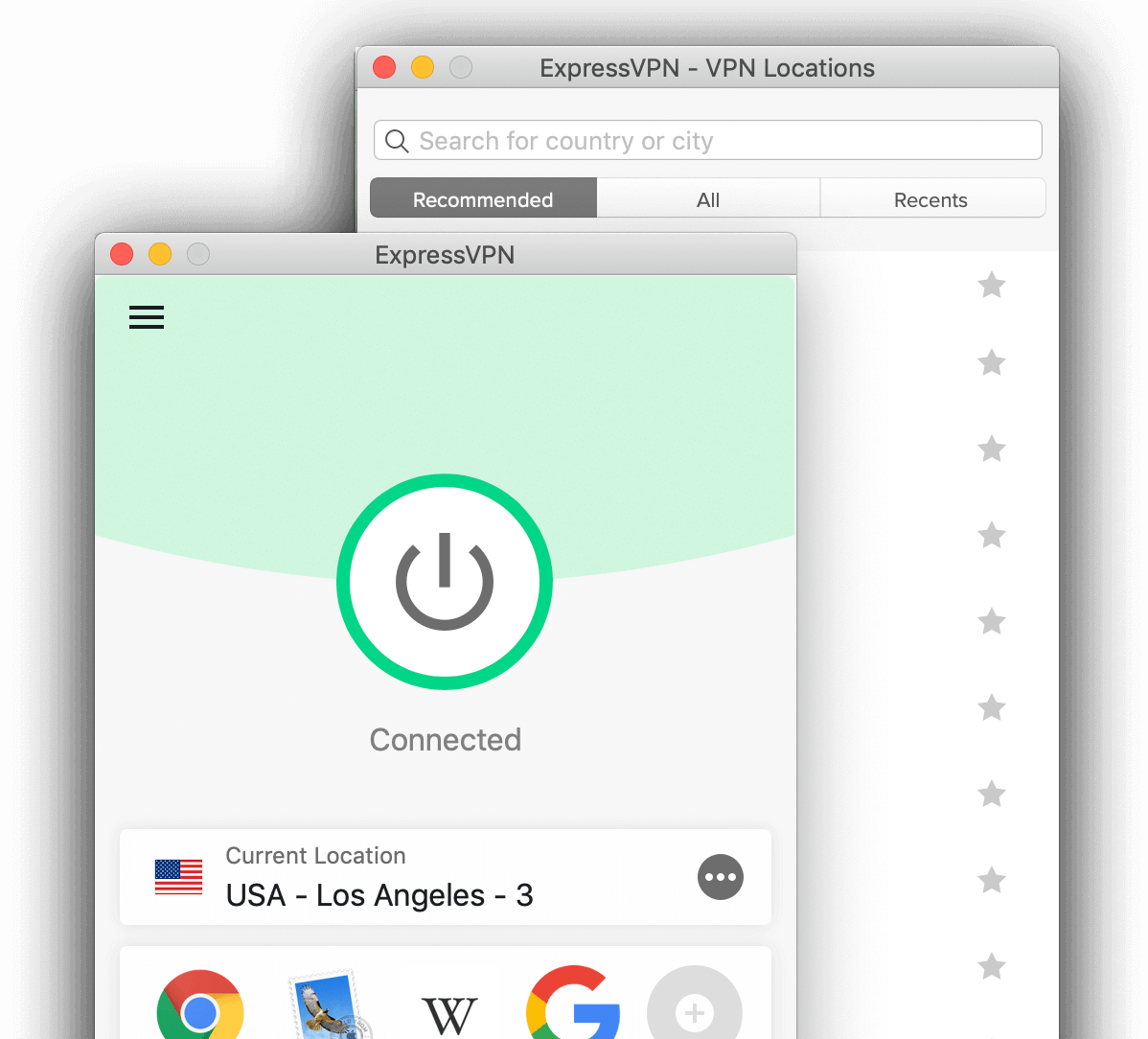
The data formatted by AweCleaner can be recovered by data recovery software. If you want to permanently erase data on the hard drive, you can try the solution 3.
Solution 3: format and erase hard drive under macOS 10.13 High Sierra with AweEraser for Mac
AweEraser for Mac is a data erasure application. It can format your hard drive and erase all the data on your hard drive, beyond the scope of data recovery. It means the data on your hard drive will be permanently erased.
Step 1: Download and install AweEraser for Mac on your Mac.
Step 2: Launch AweEraser for Mac to format your hard drive.
Launch AweEraser for Mac > Choose mode 'Erase Hard Drive' > Select your hard drive > Click on 'Erase' button. Then AweEraser for Mac will format your hard drive and permanently erase all data on the hard drive. The erased data will be lost forever.